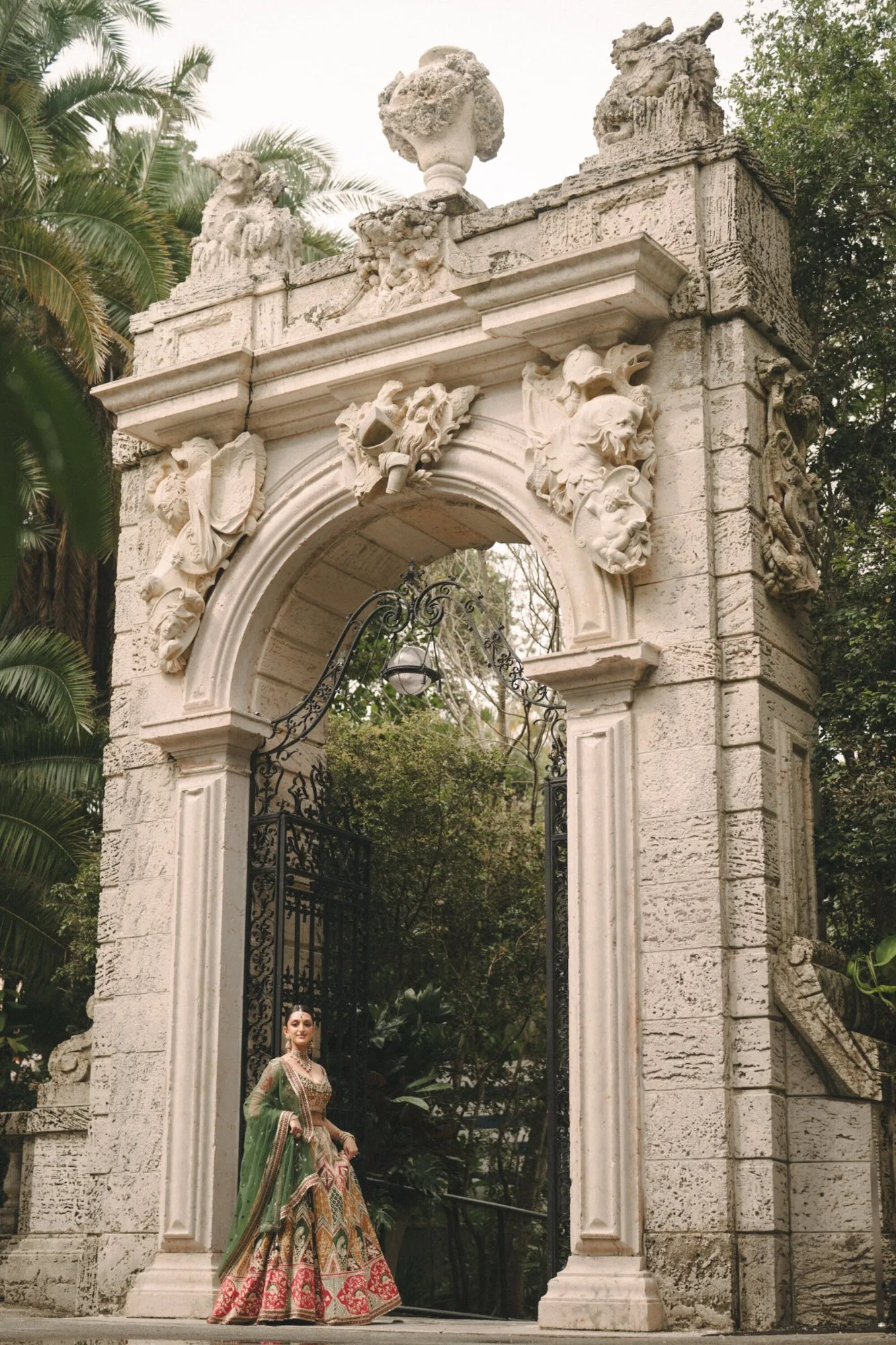
Surya Garigipati Photography & Films is an Indian and South Asian wedding photography and film studio based in Flemington, New Jersey. Since his first wedding in 2013, Surya has photographed more than 400 celebrations across more than thirty cities and destinations, and the studio is rated 4.9 on Google by 38 families. These are the 44 questions couples ask most, each answered in a few lines with a link to the page that covers it in depth.
- Booking & availability
- Coverage & events
- The team
- Wedding films
- Delivery & galleries
- Pricing & collections
- Travel & destinations
- Traditions
- Planning & timelines
Booking & availability
How far in advance should we book an Indian wedding photographer?
Most couples book twelve to eighteen months before the wedding. Peak-season Saturdays go first, often more than a year ahead, and the studio is already booking wedding weekends into 2027 and 2028. Venues and photographers book on the same calendar, so it is worth checking both dates together. Send your date and Surya confirms within 24 hours whether it is still open. Read more: Check your date.
How quickly will we hear back after we enquire?
Within 24 hours, and usually the same day. Every enquiry is read and answered by Surya personally, never by an automated reply; if he is photographing a wedding weekend, the answer may come on the Monday. The enquiry form takes about two minutes and asks for no payment. For a close date or a complicated weekend, WhatsApp or a call to 518-250-6789 is fastest. Read more: Contact Surya.
What are the steps from enquiry to booking?
There are four. You enquire with your date and events; you have a relaxed twenty-minute call with Surya, mostly about your celebration; you receive a written proposal with the coverage, team, films and exact investment, itemised to the dollar and often with options side by side; then you accept, sign and pay the reservation online in one sitting, and your date comes off the calendar. Read more: How the investment works.
What does the deposit hold, and is it refundable?
The reservation payment holds your date exclusively: no other enquiry is taken for it. It is fully refundable for seven days after booking. The rest is spread in instalments across your engagement on a schedule set out in your proposal, with the balance due 30 days before your first event. Card, Apple Pay, Google Pay and bank transfer are all accepted, and custom schedules are possible. Read more: Payments, explained.
What happens if we need to change our wedding date?
Your reservation transfers once to any other available date within eighteen months, at no charge. Dates move for reasons nobody plans for, and the studio has been through enough postponements to know it. The new date must still be open, so tell us as soon as you know; nothing extra is added to your proposal for the move. Read more: The investment page.
Can we meet Surya or see a full gallery before we book?
Yes. Most couples have a twenty-minute video call with Surya first, with no sales pitch, and couples near New Jersey can meet in person. Full galleries run to several hundred images, so they are not public, but Surya will send a private link or walk you through one on a call. On request, the studio will also introduce you to a past couple whose celebration matches yours. Read more: Arrange a call.
Coverage & events
Which wedding events do you photograph?
Every part of the weekend: the haldi or pithi, the mehndi, the sangeet or garba, the baraat, the ceremony and the reception, plus engagement and pre-wedding sessions. Most couples book the full celebration, but each event can stand on its own: the single-celebration collection covers one event, such as a sangeet, a reception or an engagement, from the first diya to the last dance. Read more: Services.
How many hours of photography does an Indian wedding need?
The wedding day usually needs ten to twelve hours with two photographers, from getting ready to the open dance floor. A full weekend with a haldi, mehndi and sangeet adds up to roughly twenty-two to twenty-eight hours. Because Indian weddings run long and start early, the studio prices by event rather than by the hour, so the ceremony is covered whatever the clock says. Read more: How many hours of photography an Indian wedding needs.
Do you cover multi-day wedding weekends?
Yes, and most couples book exactly that. Most Hindu weddings run two to four days and most Sikh weddings three. A wedding weekend is covered as one continuous story, from the first haldi to the last farewell, by a consistent team who know your families by the final day. Couples have written about the team being with them for five days of festivities. Read more: The Indian wedding weekend, hour by hour.
Do you photograph engagement and pre-wedding sessions?
Yes. A pre-wedding session runs two hours across one or two locations, with location scouting and outfit guidance included, and you receive more than eighty hand-edited images within two weeks, in time for save-the-dates. Save-the-date films are available too. Three to six months before the wedding is a good time to shoot, and couples who do one are visibly more relaxed on the day. Read more: Engagement photoshoot locations in New Jersey.
Do you photograph celebrations other than weddings?
Yes. The studio photographs sweet sixteens, housewarmings and religious ceremonies, engagement parties, family and maternity portraits, and editorial portraiture. Many of these come from families photographed at their weddings years earlier. The public Google reviews include a two-day housewarming ceremony in New Jersey, a gender reveal and baby shower, and a children's event, alongside the weddings. Read more: Celebrations and portraits.
Do you deliver the full ceremony, or only highlights?
Always the full ceremony. Every collection includes the complete ceremony in the photo gallery, and when film is included, the feature film carries the vows, speeches and ceremony in full alongside the highlight film. Lapel microphones on the couple and the officiant and a feed from the DJ mean the mantras, the vows and every speech are recorded clearly. Read more: Hindu wedding photography.
The team
Does Surya photograph every wedding himself?
Yes. Surya is the lead photographer on every wedding, without exception. He also answers his own emails, so the person you speak to before booking is the person photographing your ceremony. Depending on your collection he brings one to four others, the same people each time rather than a rotating roster of freelancers, and you meet them by name before the day. Read more: About Surya.
How big is the team, and who is on it?
Two to five photographers depending on the scale of the wedding, with cinematographers working alongside. The roles are Surya as lead photographer, a second shooter covering the other family and the reactions, a cinematographer working from the same shot list, and an album designer who lays out your book. The studio has worked with a dedicated editor since 2019. Read more: Meet the team.
Do we need a second photographer for an Indian wedding?
For the wedding day, almost always. The bride and groom get ready in different places at the same time, the baraat overlaps with the bride's final preparations, and a large ceremony has moments on both sides of the mandap. A second photographer usually matters more than extra hours, and it means both sets of parents appear equally in the album. Read more: Hours and team size, explained.
Do you use flash at the sangeet and reception?
Not on-camera flash. Before guests arrive, the team places soft, constant lights high and to the sides of the room, so faces are lit without changing the colour the DJ created. That fixes the purple skin and dark faces that uplighting and LED walls cause. In temples and in the gurdwara darbar hall, the team works without flash and within each place's own rules. Read more: Sangeet and reception lighting.
Wedding films
Do you offer both photography and videography?
Yes. Cinematography has been in-house since 2016, so photography and film are one team working from one shot list and one timeline, with no two vendors competing for the same position at the mandap. Most couples book both together, though single-celebration coverage is photography-led and film can be left out of any proposal if you prefer. Read more: Wedding films.
What wedding films do we receive?
Up to four kinds. A highlight film of four to six minutes, scored to music and covering the whole celebration; a feature film of twenty to thirty minutes with the vows, speeches and ceremony in full; a same-day edit screened at the reception; and vertical social cuts for Instagram and Reels, delivered alongside the main film. Everything is captured in 4K on multiple cameras. Read more: Film deliverables.
What is a same-day edit?
A short film of your morning and ceremony, cut on site by an editor while the reception is being set up, and screened for your guests the same night. The studio's same-day edits run about three minutes. One is included in the Wedding Weekend collection and available as an add-on to any other, and the studio calls it the single best thing it has added in ten years. Read more: The same-day edit.
How do you record the vows and speeches?
With several audio sources running throughout: lapel microphones on the couple and the officiant, plus a board feed from the DJ. Your vows and every speech are captured in full, even if the highlight film uses only a line from each. A camera microphone at the back of the room records the room rather than the words, and the speeches are often what families most want to hear again. Read more: Questions to ask an Indian wedding videographer.
Delivery & galleries
When do we receive our photographs?
A curated sneak-peek gallery arrives within 48 to 72 hours, while the celebration is still fresh. The full gallery follows in six to eight weeks, hand-edited, with every delivered image rather than a selection. Pre-wedding sessions are quicker: more than eighty edited images within two weeks. Albums are designed with you afterwards, revised until every spread is right. Read more: What every collection includes.
When do we receive our wedding film?
Highlight films are delivered in ten to twelve weeks. The feature film follows about three weeks after the highlight, and a same-day edit is, by definition, screened the same night. Photographs arrive first, with sneak peeks within days, and every film is delivered to your private portal so the whole family can watch it. Read more: Film delivery.
How are the photographs delivered, and can we print them?
In a private online gallery you can share with both families, holding every image rather than a selection. Every collection includes a print release: full personal-use rights to print any delivered image, anywhere, forever. Files are recorded to dual cards on the day and kept in redundant offsite backups, and nothing has ever been lost. Your own portal keeps the schedule, payments, documents and films together. Read more: Included in every collection.
Do you make wedding albums?
Yes. Heirloom albums, parent albums and fine-art prints can be added at booking or after the wedding, whenever you are ready, and they appear in the proposal as line items so you can see exactly what each one changes. A dedicated album designer lays out your heirloom book with you and revises it until you love every spread. Read more: Indian wedding photography packages, explained.
Pricing & collections
How much does an Indian wedding photographer cost?
With this studio, single-celebration collections begin in the mid four figures, and most couples who celebrate across a full wedding weekend make a five-figure investment. Where your wedding lands depends on the days and events, the size of the team, film, guest numbers, albums and travel. You see the exact number, itemised, in writing before you are asked to decide anything. Read more: The investment page.
Why don't you publish a price list?
Because a price list would either overcharge the intimate wedding or undercharge the grand one. A two-hundred-guest single day and a six-hundred-guest, four-day weekend need genuinely different teams. Instead, every couple receives a written proposal after the consultation, itemised to the dollar, often with two or three options side by side, and reserved for a set window so you can decide without pressure. Read more: How proposals work.
What collections do you offer?
Three shapes, each a starting point rather than a fixed package. The single celebration covers one event completely. The wedding day, the most chosen, covers both mornings' preparations, the ceremony and the reception in photography and film. The wedding weekend covers every event as one story, with a feature film and a highlight film. Roughly a third of couples tailor something beyond them. Read more: The three collections.
What is included in every collection?
A planning call with a full timeline session and a family shot list built together; sneak peeks within 48 to 72 hours; a print release; dual-card recording and redundant offsite backups; a private gallery with every image; travel within 90 miles of New Jersey; a direct line to Surya before you book, while you plan and on the day; and your own portal for schedule, payments, documents and films. Read more: Included in every collection.
Can we book photography without film?
Certainly. Single-celebration coverage is photography-led, and film can be left out of any proposal. It is worth knowing, though, that couples who skip film are the ones most likely to write a year later asking whether anyone happened to record the speeches. Photography and film are listed together in one proposal, so you can see exactly what each part covers before deciding. Read more: The investment page.
Travel & destinations
Do you charge travel for weddings in New York City or Philadelphia?
No. Travel within 90 miles of New Jersey is included in every collection, and that covers New York City and Philadelphia. Manhattan, Brooklyn, Queens, Long Island and Westchester are part of a normal season, and so are Center City, the Main Line, King of Prussia and Bucks County; Flemington is just over an hour from Philadelphia. Read more: Indian weddings in New York City.
Do you travel for destination weddings?
Yes, regularly. Travel within the continental United States is included in the Wedding Weekend collection. International celebrations, in India, the Caribbean, Mexico and Europe, are quoted per event, with flights, accommodation and a day either side written openly into the proposal and never added as a surprise. For most of the season the team is on the road somewhere between Boston and Miami. Read more: Where we work.
Which areas do you serve?
Home base is Flemington, New Jersey. The studio photographs all of New Jersey, North, Central and South, plus New York, Connecticut and Pennsylvania; Boston, Washington DC, Maryland, Virginia and the Carolinas on the East Coast; Chicago, Dallas, Houston, Atlanta, Miami and California nationwide; and destination weddings worldwide. Dedicated pages cover New Jersey, New York City, Philadelphia and Virginia. Read more: Indian wedding photographer in New Jersey.
We are planning from overseas. Is that a problem?
Not at all; it is very common. Plenty of couples plan a US wedding from India, the UK or the Gulf. WhatsApp is usually easiest across time zones and goes straight to Surya, and the call, the proposal, the contract and the payments all happen online, with your own portal keeping the schedule and documents in one place while you are away. Read more: Message Surya.
Traditions
Which South Asian wedding traditions do you photograph?
Hindu ceremonies of every tradition, including Gujarati, Punjabi, Telugu, Tamil, Marathi, Bengali and Sindhi; the Sikh Anand Karaj; and fusion weddings with a Hindu ceremony and a Catholic, Sikh or Jewish one on the same day. Surya grew up inside these traditions, so the jaimala, the pheras, the laavan and the vidaai are anticipated rather than explained on the day. Read more: South Asian wedding photographer.
Can you photograph a Hindu ceremony inside a temple?
Yes. The team photographs regularly at BAPS Shri Swaminarayan Mandir in Robbinsville, the Sri Venkateswara Temple and the Balaji Temple in Bridgewater, and temples across New Jersey. Each has its own rules on flash, positions and dress, and the team works within them without asking the priest to wait. In dim temple halls, soft lights set before the family arrives keep the ceremony looking like daylight. Read more: Hindu wedding photographer in New Jersey.
Do you know how to photograph a Sikh Anand Karaj?
Yes. Heads covered, shoes off, no flash in the darbar hall, and never crossing in front of the Guru Granth Sahib. The team works from the sides and the back with longer lenses, one photographer at the front corner and one behind the sangat, so the four laavan read as a sequence. Recent ceremonies were at gurdwaras in Bridgewater, Lawrenceville, Glen Rock and Carteret. Read more: Sikh wedding photographer in New Jersey.
Do you photograph Gujarati weddings and garba nights?
Yes, from the Mandvo Mahurat and the pithi at home to the pokwanu at the mandap gate, the antarpat and the four Mangal Fera. Garba is often the biggest event of a Gujarati weekend, so it is covered with two photographers, one high to show the circle and one inside it, with soft light that keeps faces visible and the colour of the room intact. Read more: Gujarati wedding photography.
Do you know Telugu and Tamil wedding rituals?
Yes. Surya is Telugu and grew up in these ceremonies. The team knows the jeelakarra-bellam at the exact muhurtham, the mangalsutra and the talambralu, and the Tamil kashi yatra, oonjal and mangalyadharanam. A South Indian muhurtham often falls between six and eight in the morning, sometimes late at night, and it is covered whenever the priest sets it. Read more: Telugu and Tamil wedding photography.
Can you photograph a fusion or interfaith wedding with two ceremonies?
Yes. It is one of the most common shapes of wedding the studio covers: most often Hindu and Catholic, sometimes Hindu and Jewish, Hindu and Sikh, or a Nikah alongside a Hindu ceremony. One timeline is built for both, positions are agreed with the priest and officiant in advance, and two photographers cover each family. Allow at least two hours between ceremonies. Read more: Fusion and interfaith weddings.
Planning & timelines
Do you help plan the wedding timeline?
Yes, it is part of every booking. Before the wedding there is a full timeline session, a family shot list built together, and a venue walkthrough where possible. The timeline is built around the muhurtham, the venue and the light, then shared with your planner and your family so everyone works from one written schedule. By the wedding day, nothing should be a surprise. Read more: The wedding weekend timeline.
How long do family portraits take at an Indian wedding?
About twenty-five minutes for twelve to fifteen groups agreed in advance, with a named person from each family gathering people; allow forty-five minutes in the timeline. Without a list, family portraits routinely take up to two hours, and that time usually comes out of the couple's own portraits. Give your photographer the family list and the personal details only you know. Read more: The Indian wedding photography shot list.
When is the best time of year for an Indian wedding in New Jersey?
September and early October, closely followed by late May and June: mild temperatures, soft light and the best odds for an outdoor ceremony. They are also the most requested dates, so the best Saturdays at large venues are reserved more than a year ahead. Winter suits a ballroom wedding well, because a properly lit ballroom photographs the same in January as in June. Read more: The best time of year for an Indian wedding in New Jersey.
Which New Jersey venues work best for an Indian wedding?
The ones built for a baraat, a mandap and a big reception under one roof: The Palace at Somerset Park, The Venetian in Garfield, the Grand Marquis in Old Bridge, The Legacy Castle, Park Château, Crystal Plaza, Addison Park and The Merion among them. The studio photographs at most of them every season, and its venue guide covers the light and logistics of each. Read more: The best Indian wedding venues in New Jersey.
When should the baraat happen for the best photographs?
Before nine in the morning or after four in the afternoon, when the sun is low and kind. If the muhurtham fixes a midday baraat, the route is planned so the sun is behind the groom. Keep the route to a hundred to two hundred metres, agree the start, path and end with the venue in writing, and expect two photographers: one walking ahead, one inside it. Read more: How to plan your baraat for photographs.
Something not covered here?
Send us your date and your events. Surya replies personally within 24 hours, usually the same day.
Ask Us Directly