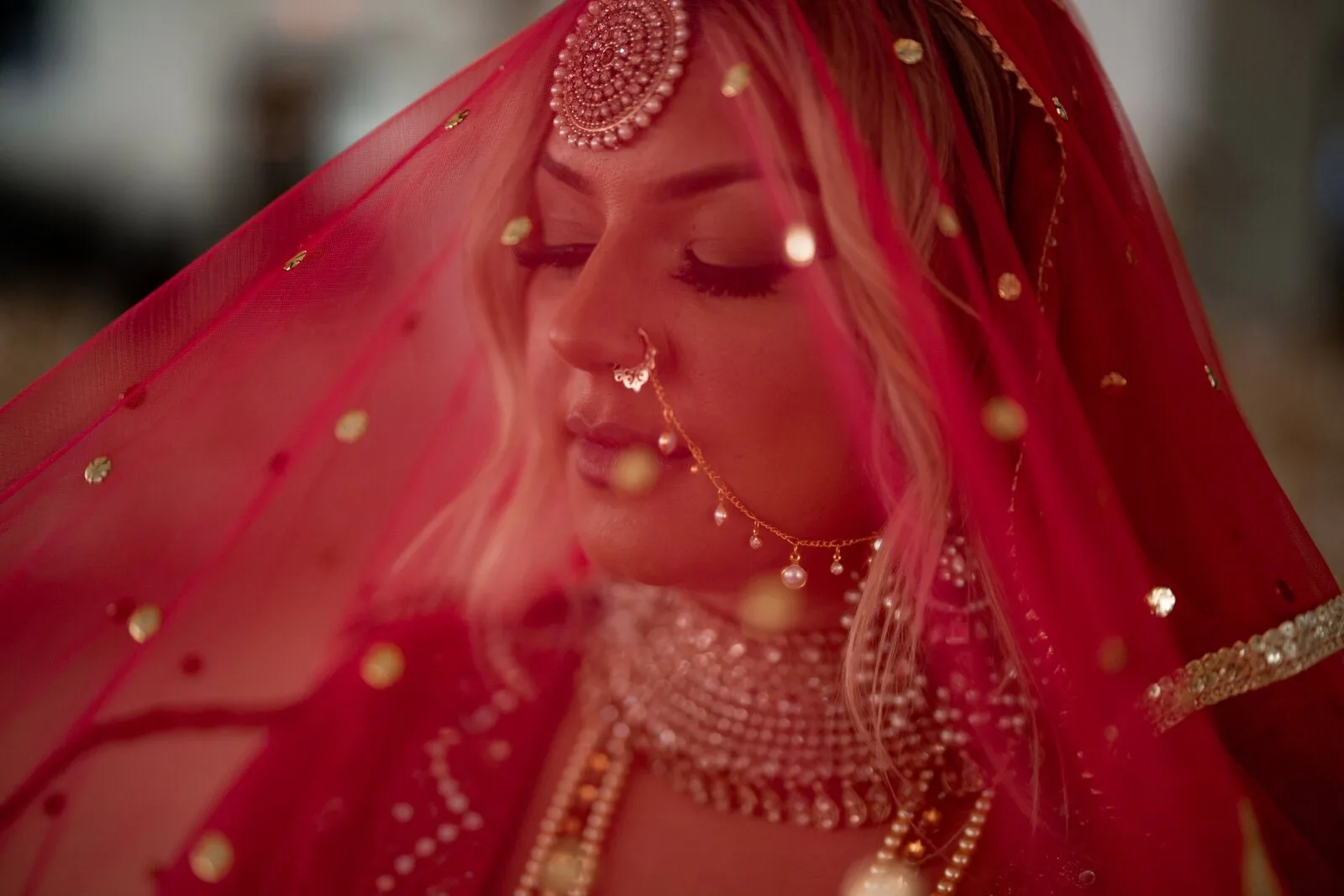
Surya Garigipati Photography & Films photographs Bengali Hindu weddings across New Jersey and New York, from the gaye holud to the saat paak, shubho drishti, mala badal and sindoor daan. Surya is lead photographer on every wedding, the film team records the mantras in full, and evening lagnas are lit softly without on-camera flash.
At a glance
| Traditions | Bengali Hindu ceremonies, among the Gujarati, Punjabi, Telugu, Tamil, Marathi and Sindhi weddings the studio photographs |
| Studio | Surya Garigipati Photography & Films LLC, Flemington, New Jersey |
| Experience | Weddings since 2013; more than 400 South Asian celebrations |
| Team | Two to five photographers by scale, cinematographers in-house since 2016 |
| Travel | New Jersey, New York City and Philadelphia included in every collection |
| Reviews | 4.9 on Google from 38 public reviews: read them |
What makes a Bengali wedding different to photograph?
Three things. The ceremony follows the lagna, the auspicious time, and for many Bengali families that falls in the evening or late at night, so the most important minutes of the day often happen in a dimly lit hall. The key moments are physical and quick: the bride carried in on the piri, the betel leaves lowered from her face, the garlands passed back and forth. And the colour palette is its own: the red-and-white of the shankha and pola, the alta on her feet, the topor and the mukut, the red Benarasi. Each of those needs to read clearly in the photograph.
Which moments do we plan for?
- Gaye holud. The turmeric ceremony, at home, usually in daylight: close, playful, and best photographed by one photographer working near the family.
- The groom’s arrival. The bor jatri and the welcome at the door, with the conch shells and the ululation, which the film team records.
- Saat paak and shubho drishti. The bride carried around the groom seven times on the piri, her face hidden behind betel leaves, then lowered to look at him for the first time. This is the photograph of the wedding, and we cover it from two angles: one on her face, one on his.
- Mala badal. The exchange of garlands, often with the families lifting the couple out of reach of each other.
- Sampradan, the yagna and anjali. The giving away, the sacred fire and the puffed rice offered into it, photographed without flash from positions agreed with the priest.
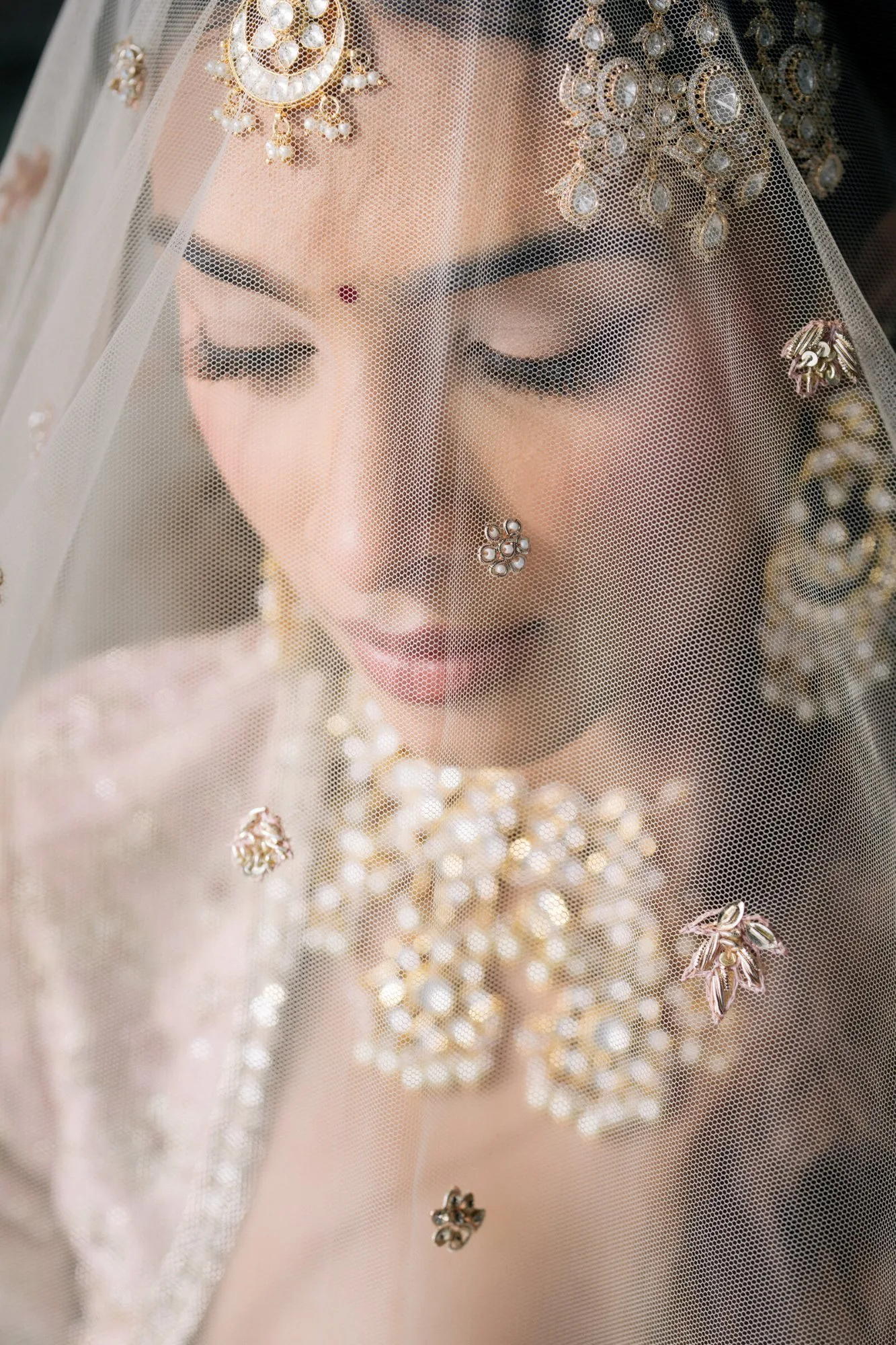
- Sindoor daan and the ghomta. The vermilion in her parting and the veil drawn over her head: a few seconds, framed close.
- Bidaai and the reception. The farewell, and the bou bhat or reception afterwards, which we light like any evening party.
How do you light an evening lagna?
Without on-camera flash, which would flatten the faces and cut through the ceremony. Before the family sits down, the team places soft, constant light around the mandap and high to the sides of the room, so the fire and the faces both read naturally. The film team puts lapel microphones on the priest and the couple, so the mantras are recorded in full. The same approach is explained in our guide to sangeet and reception lighting.
Where do Bengali weddings in New Jersey take place?
In banquet halls, hotel ballrooms and community temples across the state, and across the river in New York. We photograph at the big Central and North Jersey venues every season; our guide to Indian wedding venues in New Jersey covers the light in each, and we visit any venue we have not worked in before the day.
Do you photograph Bangladeshi weddings too?
Yes. Muslim Bangladeshi weddings, with the holud, the nikah and the walima, are covered on our desi wedding photographer page and in the guide to Muslim wedding photography.
How do we book?
Send us your date, your venue and the time of the lagna if you know it. Surya replies personally within 24 hours, then a twenty-minute call, then a written proposal itemised to the dollar. Most couples book twelve to eighteen months ahead. See packages and prices, our page for a Hindu wedding photographer in New Jersey, or check your date.
Questions Bengali couples ask us
Do you photograph Bengali weddings?
Yes. Bengali Hindu ceremonies are among the traditions the studio photographs, alongside Gujarati, Punjabi, Telugu, Tamil, Marathi and Sindhi weddings, across New Jersey, New York and beyond.
Our lagna is late at night. Is that a problem?
No. Ceremonies are covered whenever the priest sets them. We light the mandap softly in advance, without on-camera flash, so a late lagna photographs as well as a morning one.
How do you photograph shubho drishti?
From two angles at once: one photographer on the bride as the betel leaves are lowered, one on the groom’s reaction. It lasts seconds, so positions are agreed with the priest beforehand.
Will the mantras be recorded on the film?
Yes. Lapel microphones on the priest and the couple, plus a feed from the sound system, mean the ceremony is recorded in full for the feature film.
Do you cover the gaye holud at home?
Yes. It can be part of a wedding weekend collection or booked as a single celebration.
Your Bengali wedding
Tell us your date, your venue and your lagna time. Surya replies personally within 24 hours.
Check Your Date