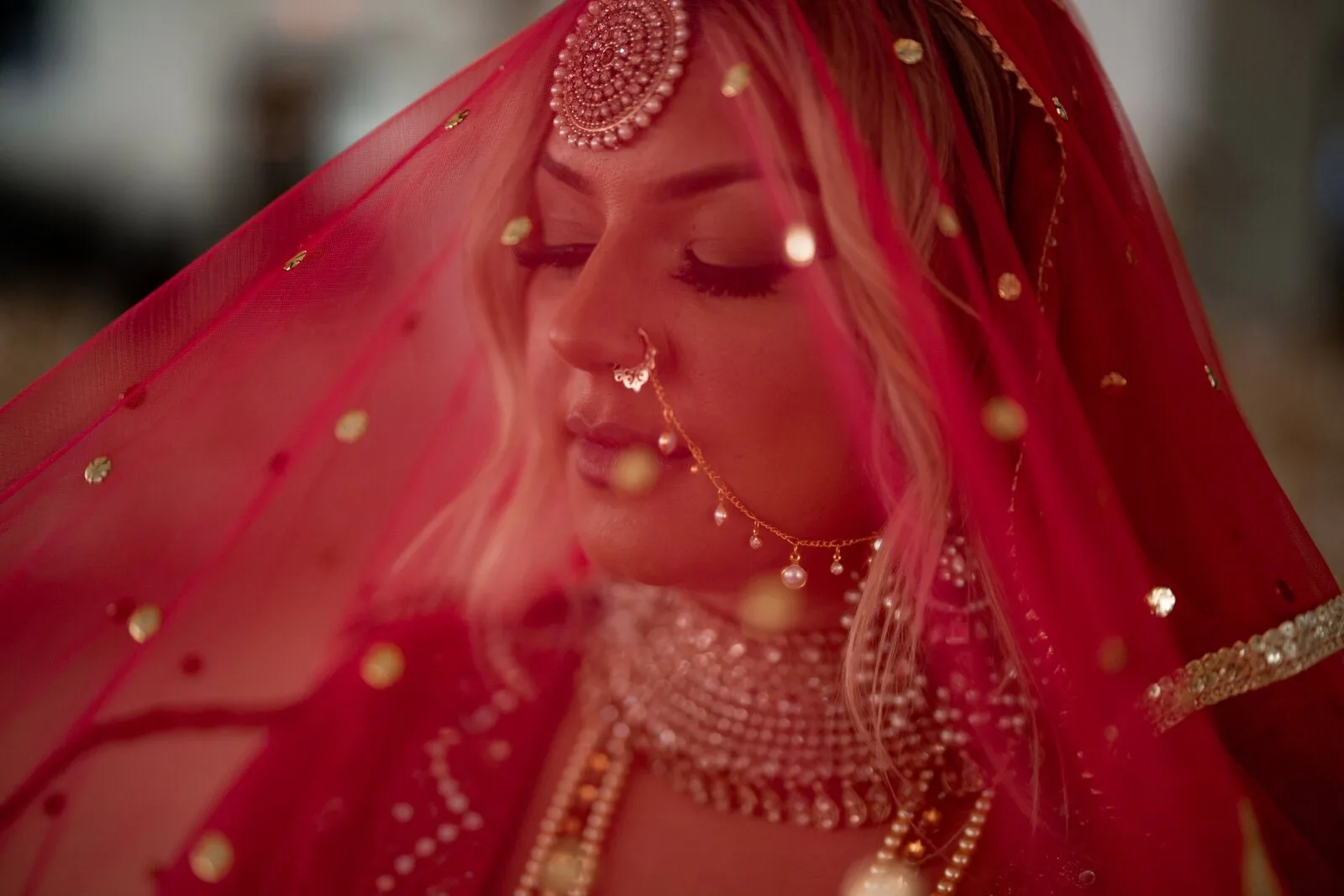
Surya Garigipati Photography & Films photographs Gujarati weddings across New Jersey and New York: the Mandvo Mahurat at home, the Pithi, the Garba night, the Jaan and Ponkhvu at the door, and the ceremony built around the four Mangal Fera. The Flemington studio has photographed more than 400 South Asian celebrations since 2013 and is rated 4.9 on Google.
At a glance
| Traditions | Gujarati Hindu ceremonies, among the Punjabi, Telugu, Tamil, Marathi, Bengali and Sindhi weddings the studio photographs |
| Studio | Surya Garigipati Photography & Films LLC, Flemington, New Jersey |
| Where | Edison and Iselin, the halls of Middlesex and Somerset counties, BAPS Shri Swaminarayan Mandir in Robbinsville, and across New Jersey and New York |
| Team | Two to five photographers by scale, cinematographers in-house since 2016 |
| Travel | New Jersey, New York City and Philadelphia included in every collection |
| Experience | Weddings since 2013; more than 400 South Asian celebrations |
| Reviews | 4.9 on Google from 38 public reviews: read them |
How a Gujarati wedding weekend runs
A Gujarati wedding in New Jersey usually unfolds over three or four days: the Mandvo Mahurat and Griha Shanti at home, a Pithi morning in turmeric, a Garba night that seems to bring half of Edison, and a Hindu ceremony built around the Mangal Fera. The best moments, the Ponkhvu at the door, the antarpat lowering, the Kansar, last seconds, so a photographer has to know the order before it happens. We do, and we plan one photographer on each family’s side for the moments that happen at the door.
Before the wedding: Mandvo Mahurat, Griha Shanti and Mameru
The Mandvo Mahurat opens the wedding: the family prays to Ganesh, the priest blesses the ground where the mandap will stand, and both homes begin the celebration. It is small and quiet, and it is the first page of the album. The Griha Shanti follows, a puja for the peace of the home, and many families hold the Mameru, when the bride’s maternal uncle arrives with gifts, often the panetar saree she will wear at the start of the ceremony. One photographer, natural light, nothing directed; we photograph the trays before they are opened and the uncle’s face when she sees them.
The Pithi
The Gujarati turmeric ceremony is gloriously messy and mostly at home, in a living room in Iselin or a backyard in Edison, in the morning. We shoot wide, then close: the whole room first, then the hands, the paste, the grandmother’s thumb on the bride’s cheek. We ask for shade, because yellow in direct sun turns brassy and open shade or a bright window keeps it golden. Our mehndi and haldi guide covers setting a room up for it.
Garba and Raas
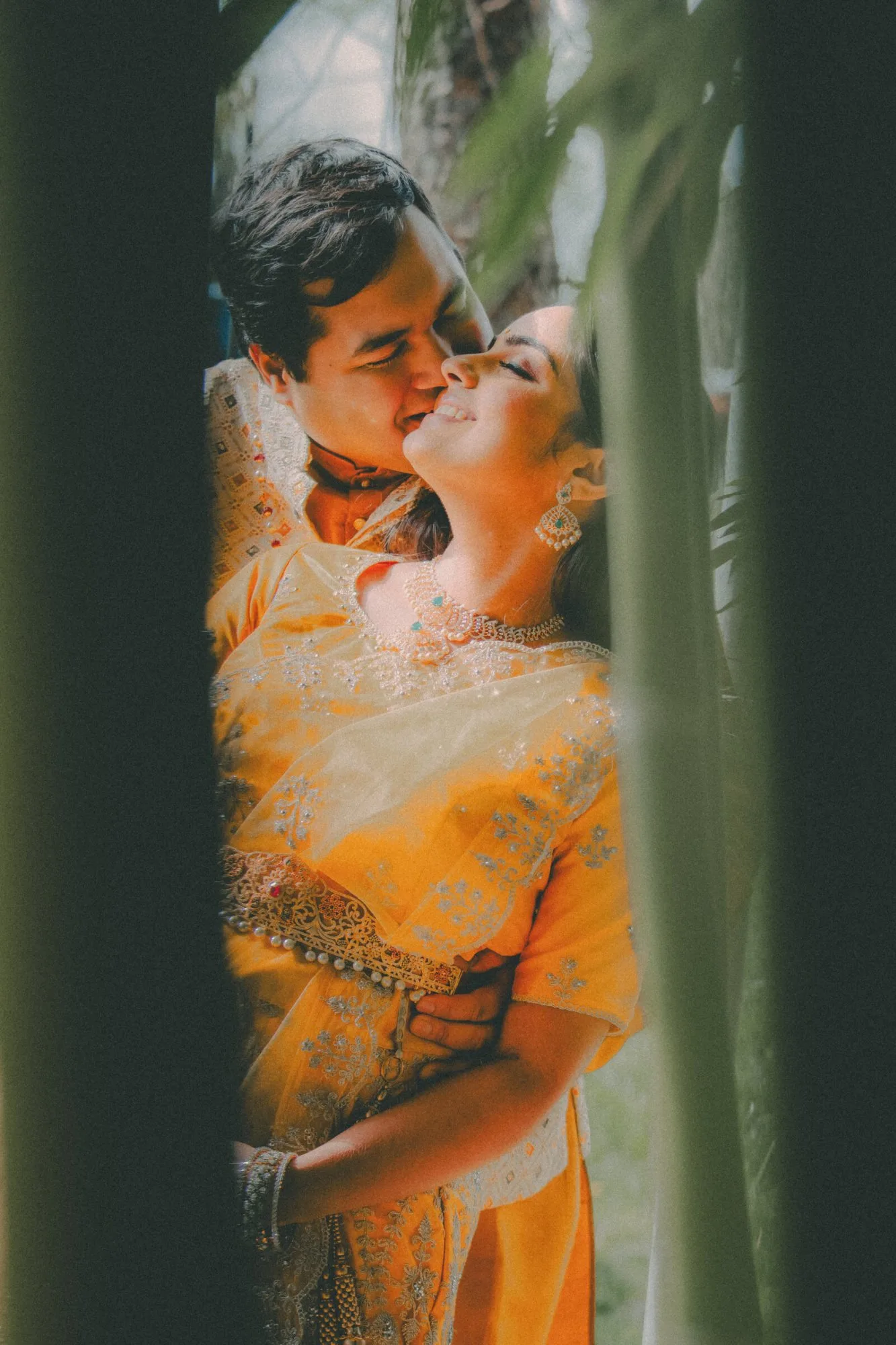
The Garba night is the Gujarati sangeet, and in New Jersey it is often the biggest event of the weekend. From the floor it is a wall of moving backs, so one of us goes high, to a stage, a balcony or a chair, to show the shape of the circle, while the other goes inside it. We use a fast shutter for faces and a deliberately slow one for the swirl of the chaniya choli, and we bring our own soft light so the colour of the room stays and the people in it are visible. If a film is included, Garba is where it comes alive; the sound of the dhol carries the edit. Our guide to sangeet and reception lighting explains how.
The Jaan and the Ponkhvu
The groom arrives with the Jaan, the Gujarati baraat, the dhol and his friends dancing ahead. At the entrance the bride’s mother performs the Ponkhvu, welcoming him with a tray and a lamp and, in many families, playfully reaching for his nose; he breaks a small clay pot underfoot before stepping toward the mandap. It all happens in about a minute, in a crowd, so we put one photographer on each family’s side at the door. Our baraat guide covers the route and the light.
The ceremony, moment by moment
- Madhuparka. The groom is seated, his feet washed by the bride’s parents, and his sisters-in-law start planning the theft of his shoes.
- Kanya Aagman. The bride is brought to the mandap by her maternal uncles: the groom’s first sight of her, photographed from behind his shoulder for his face and wide for hers.
- Antarpat and Jaimala. A cloth held between them and lowered; the garlands follow.
- Hasta Milap and Granthi Bandhan. Their hands joined, the end of her saree tied to his shawl: a detail photographed close.
- Kanyadaan. The parents give her hand. The father’s face is the photograph.
- Mangal Fera. Four rounds of the fire, the bride leading some and the groom others, with the race to sit down first at the end. We know which round is the last.
- Saptapadi, Kansar and the vidaai. The seven steps, the sweet fed to each other, and the farewell photographed from a distance with long lenses.
Our guide to Gujarati wedding photography in New Jersey goes through the weekend in more detail.
Where Gujarati weddings in New Jersey happen
At home in Edison and Iselin for the morning rituals; at Royal Albert’s Palace in Fords, The Grand Marquis, The Palace at Somerset Park and Addison Park, whose events team has deep experience of Gujarati weddings, for the ceremony and the reception; and at BAPS Shri Swaminarayan Mandir in Robbinsville, where we photograph regularly within the mandir’s rules. Our Edison and Central New Jersey pages cover the halls and the portrait locations around them.
How do we book?
Send us your dates and your venue. Surya replies personally within 24 hours, then a twenty-minute call, then a written proposal itemised to the dollar. The Wedding Weekend collection covers the Pithi, the Garba, the ceremony and the reception as one story with a consistent team; see packages and prices, our Hindu wedding photographer page, or check your date.
What couples wrote on Google
"Surya was absolutely exceptional for us! He went above and beyond in our engagement photoshoot, and on the day of, his team was awesome to work with." — Chetan Jhaveri
"We appreciate the opportunity to work with you Surya. Thanks for all the advice and help you gave to us… You're a great person to work with and we truly appreciate the time and effort you put into doing an excellent job." — Rina Sheth
Questions Gujarati couples ask us
Do you photograph Gujarati weddings?
Yes. Gujarati ceremonies are among the traditions the studio photographs most, from the Mandvo Mahurat at home to the Garba night and the Mangal Fera, across New Jersey and New York.
How do you photograph the Garba?
One photographer goes high to show the circle and one goes inside it, with a fast shutter for faces and a slow one for the swirl of the chaniya choli. We bring our own soft light so the room keeps its colour and the dancers are visible.
Can you cover the Pithi at home and the ceremony at the hall as one booking?
Yes. Collections are built around your real event list. The Wedding Weekend collection covers the home rituals, the Garba, the ceremony and the reception with one consistent team.
Do you photograph at BAPS Shri Swaminarayan Mandir in Robbinsville?
Yes, regularly, within the mandir’s rules on flash, positions and dress, which we confirm before every wedding.
Will the Mangal Fera and the vows be on the film?
Yes. The film team records the ceremony in full on lapel microphones and a feed from the sound system, and the feature film carries the ceremony and the speeches uncut.
How much does a Gujarati wedding photographer cost in New Jersey?
Single-celebration collections begin in the mid four figures, and most couples who celebrate across a full wedding weekend make a five-figure investment, set out in a written, itemised proposal.
Your Gujarati wedding
Tell us your dates and your venue. Surya replies personally within 24 hours.
Check Your Date