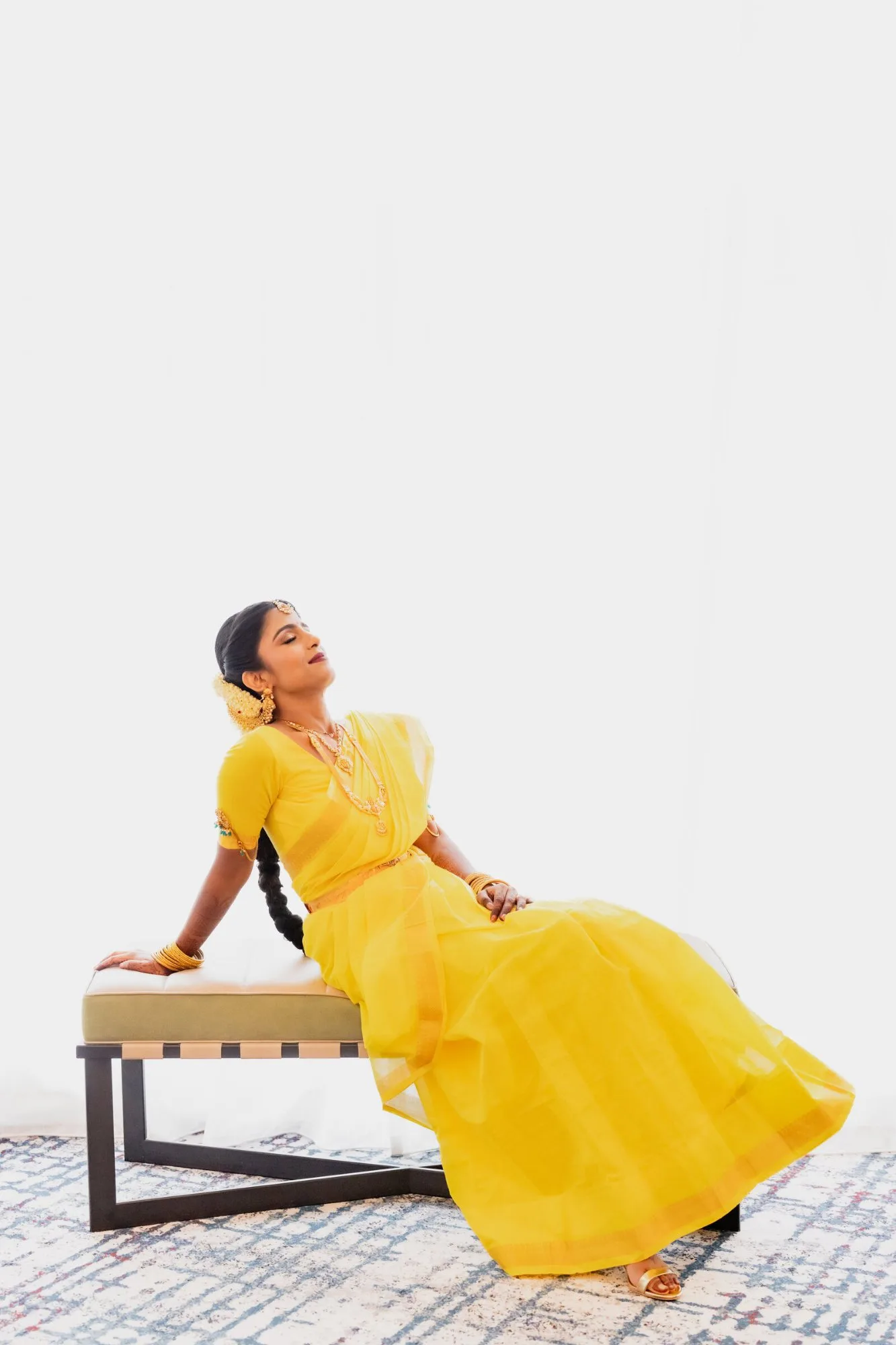
Surya Garigipati Photography & Films is a South Indian wedding photographer and filmmaker in Flemington, New Jersey, and Surya is Telugu himself. The studio photographs Telugu, Tamil, Kannada and Malayali ceremonies across New Jersey and New York, covering dawn muhurthams with two photographers and the mandap lit in advance, and is rated 4.9 on Google from 38 reviews.
At a glance
| Traditions | Telugu, Tamil, Kannada and Malayali ceremonies, including early-morning muhurthams |
| Who | Surya is Telugu and the lead photographer on every wedding, without exception |
| Studio | Surya Garigipati Photography & Films LLC, Flemington, New Jersey |
| Where | The Sri Venkateswara and Balaji temples in Bridgewater, temple halls across Middlesex County, the ballrooms of Central and North Jersey, and New York |
| Team | Two photographers for the muhurtham, cinematographers in-house since 2016 |
| Travel | New Jersey, New York City and Philadelphia included in every collection |
| Experience | Weddings since 2013; more than 400 South Asian celebrations |
| Reviews | 4.9 on Google from 38 public reviews: read them |
Why a South Indian wedding needs a photographer who knows the order
A Telugu or Tamil ceremony moves through a fixed sequence, often at six, seven or eight in the morning, and its most important moments last seconds: the curtain dropping at the jeelakarra bellam, the second knot of the mangalsutra, the thali tied while the drums are at their loudest, the first handful of talambralu. There is no second take. Surya grew up inside these ceremonies before he photographed one, so the team is in position before each moment rather than reacting to it, and nobody has to explain the ritual on the day. New Jersey has one of the largest South Indian communities in the country, and these are the weddings that fill our calendar.
The Telugu ceremony
- Pelli Koduku and Pelli Kuthuru. The pre-wedding pujas at home, in morning light, with one photographer moving quietly.
- Ganesh puja and Kanyadaanam. The bride’s parents give her hand; the father’s face is the photograph, from behind the groom’s shoulder.
- Jeelakarra Bellam. The cumin-and-jaggery paste placed on each other’s heads at the exact muhurtham, with the terasala between them. When the curtain drops, a second photographer is already on the groom’s side.
- Mangalya Dharanam. Three knots; the second photographed tight, and the whole mandap wide for the family.
- Talambralu. The rice-and-turmeric shower that starts formal and becomes a game, shot fast and wide.
- Saptapadi and Arundhati Nakshatram. The seven steps, then the couple led outside to look for a star, often in daylight.
- Appagintalu. The farewell: ten minutes photographed from a distance with long lenses, nothing directed.
The Tamil ceremony
- Nichayathartham. The engagement, often weeks before, with the families’ exchange of plates.
- Kasi Yatra. The groom leaves for Kashi with an umbrella and a walking stick and the bride’s father talks him out of it; we photograph the reactions.
- Oonjal. The couple on the swing while the women sing and circle them with rice balls and lamps; a shutter that stops the swing.
- Kanyadaanam and Mangalya Dharanam. The bride on her father’s lap, the thali tied, the nadaswaram and drums at their loudest. We tell the couple beforehand that the noise is the signal to look at each other, not at us.
- Saptapadi and Sesha Homam. Seven steps around the fire; the smoke gives the ceremony its light.
- Nalangu. The games afterwards, rolling the coconut and finding the ring in the pot: pure documentary.
Our guide to Telugu and Tamil wedding photography in New Jersey goes through both ceremonies moment by moment.
Kannada and Malayali weddings
Kannada ceremonies share the morning muhurtham and much of the sequence, with the dhare herdu, the pouring of water over the couple’s joined hands, as the moment the family waits for. A Kerala Hindu wedding is the shortest of all: the thalikettu is over in minutes, the kanyadaanam and the walk around the fire follow, and the sadya is served on banana leaves afterwards. For those few minutes we put two photographers on the mandap and nothing else. Our Malayali wedding photographer page covers the Kerala ceremony in detail.
The dawn muhurtham, and how we light it
Most South Indian ceremonies in our area happen at a temple hall or a community hall in Middlesex County, or at the Sri Venkateswara Temple in Bridgewater, in the morning, with the reception at a ballroom in the evening. Temple halls are lit warmly from above, so we place our own soft light around the mandap before the family arrives, within the temple’s rules, and the ceremony photographs feel like daylight rather than flash. A Kanchipuram silk saree reads as a colour in flat light and as a fabric in directional light, every thread of zari catching; it is the single reason we light South Indian ceremonies the way we do, and the same is true of temple jewellery. Our temple wedding photographer page explains how we work inside a temple.
The reception, and the film
The evening is lit like any reception: soft constant lights placed high in the room before the guests arrive, so faces are lit without flattening the colour the DJ built. Cinematography has been in-house since 2016; the film team records the mantras, the nadaswaram and the speeches in full on lapel microphones and a feed from the sound system, and couples receive a four-to-six-minute highlight film and a twenty-to-thirty-minute feature film. The films page has real weddings to watch, and the Indian wedding videographer page explains each film.
How do we book?
Send us your date, your venue and the time of the muhurtham if the priest has fixed it. Surya replies personally within 24 hours, then a twenty-minute call, then a written proposal itemised to the dollar. Most couples book twelve to eighteen months ahead. See packages and prices, our page for a Hindu wedding photographer in New Jersey, or check your date.
What couples wrote on Google
"We had great pleasure working with Surya and his team for Sangeet, Haldi, pellikuthuru & pellikoduku and wedding. His work and quality of pictures and videos were amazing." — Divya Kathyayani Bandaru
"Surya excels in capturing the ideal scene in a short time. He is passionate about accurately capturing and expressing minute details in photographs and videos." — Dhanumjaya Bodala
Questions South Indian couples ask us
Do you photograph Telugu and Tamil weddings?
Yes, and Kannada and Malayali ceremonies too. Surya is Telugu and grew up inside these weddings; they are the ones that fill our calendar in New Jersey and New York.
Our muhurtham is at 6:30 in the morning. Can you cover it?
Yes. Early muhurthams are normal for us. Two photographers are in position before the family sits down, the mandap is lit in advance within the temple’s rules, and the pre-wedding pujas at home the day before can be covered as well.
How do you photograph the jeelakarra bellam and the mangalsutra?
With two photographers: one on the bride and one on the groom as the terasala drops, then a tight frame of the second knot and a wide one of the whole mandap for the family. The positions are agreed with the priest beforehand.
Will the mantras and the nadaswaram be on the film?
Yes. Lapel microphones on the priest and the couple and a feed from the sound system mean the ceremony is recorded in full for the feature film.
Can you photograph inside the Bridgewater temple?
Yes. The team photographs regularly at the Sri Venkateswara and Balaji temples in Bridgewater, following each temple’s rules on flash, positions and dress, confirmed before the day.
How much does a South Indian wedding photographer cost in New Jersey?
Single-celebration collections begin in the mid four figures, and most couples who celebrate across a full wedding weekend make a five-figure investment, set out in a written, itemised proposal.
Your South Indian wedding
Tell us your date, your venue and your muhurtham. Surya replies personally within 24 hours.
Check Your Date